
Market Analysis
One coin, several prices
Oct 15, 2026 · 4 min read

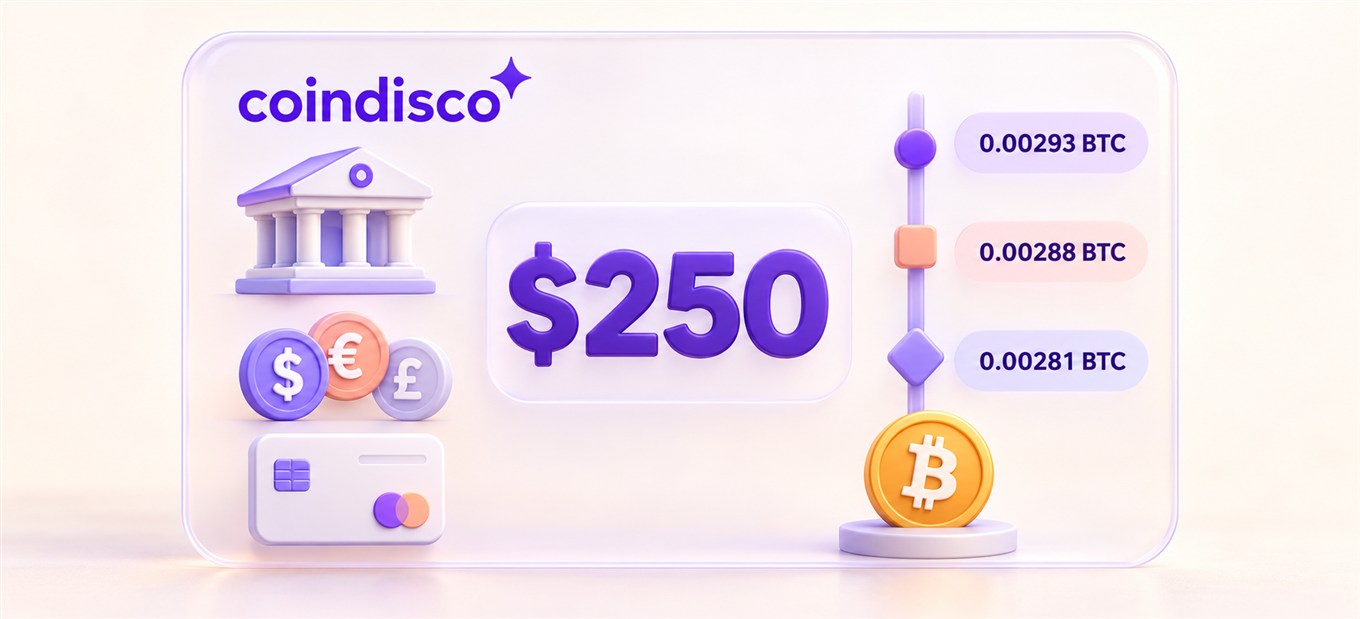
A buyer opens two screens for the same $250 Bitcoin purchase. One shows 0.00293 BTC. The other shows 0.00281 BTC. The asset is identical. The Bitcoin network is the same. The purchase amount stays fixed, but the amount of BTC changes.
The figures are illustrative, but the gap is real. Cryptocurrency trades across separate markets with different buyers, sellers, currencies and liquidity. That is why crypto prices differ between exchanges, countries and payment routes.
Coindisco turns that market difference into a practical comparison. Several offers for one purchase can return different amounts of cryptocurrency.
Crypto prices differ between exchanges
Each crypto exchange records trades in its own market. Its price comes from the orders available there. Another exchange has a different group of buyers and sellers, so its latest trade and next available price can differ.
A quoted price may also describe different things. It can be the last completed trade, the midpoint between buyers and sellers, or an index built from several venues. Those numbers may sit close together without being identical.
Even professional benchmarks combine several venues. The CME CF Bitcoin Reference Rate aggregates trade data from major Bitcoin-dollar markets. A benchmark exists because one venue cannot represent every trade.
Liquidity shapes every offer
A deep market has many buy and sell orders close together. A modest purchase moves through that market with little change in price. A thinner market may reach the next seller sooner, at a higher level.
The bid-ask spread is the visible edge of that difference. Market depth sits underneath it. Two venues can show similar last-traded prices while returning different amounts for the same purchase.
Order size matters too. A small trade may use the best available price. A larger trade may consume several sell orders. The average price then moves away from the first number shown on the screen.
Arbitrage pulls large markets toward one another. Traders buy where an asset is cheaper and sell where it is more expensive. Transfer costs, settlement time, access and capital limits leave room for small gaps to survive.
Local currency creates a market
A Bitcoin-dollar market and a Bitcoin-lari market are separate markets. Local demand, access to foreign currency and banking conditions shape each one.
IMF research on local cryptocurrency premiums found that restrictions on foreign-currency access can produce persistent gaps between domestic and global Bitcoin prices. The coin stays the same. The route into the market changes.
Currency conversion adds another layer. A local quote can reflect both the crypto market and the exchange rate used for the fiat currency. That combination may differ from a dollar price converted with a public reference rate.
Available currencies and payment routes also depend on country. Coindisco keeps the current combinations on its coverage page.
Payment routes change the total
A card, bank transfer and digital wallet do not travel through the same payment rail. Timing, processing cost, risk and provider limits differ. Those conditions become part of a purchase offer.
The result appears beside an exchange rate, but the exchange rate is only one part of the purchase. The payment route and its fees also affect the amount of cryptocurrency received.
A lower headline price does not guarantee a larger crypto amount. Another offer can use a less attractive rate but include a cheaper payment route. The final amount brings those moving parts into one comparable number.
The chart price is a reference
A coin page needs one number, so it usually shows a market price or index. That number gives useful orientation. It is not the final result of a card or bank purchase.
The useful comparison starts with the money spent and ends with the cryptocurrency received. A $250 purchase returning 0.00293 BTC gives more BTC than one returning 0.00281 BTC. The difference is 0.00012 BTC.
This is why the best crypto rate is the amount that reaches the wallet. A headline rate matters only after every part of the offer reaches the same total.
One amount needs one context
Every Coindisco offer belongs to a specific purchase context. It includes the cryptocurrency, network, fiat currency, amount, country and payment route. Change one part and the available offers can change with it.
A payment profile keeps the country, currency and payment categories together. The offer screen then shows results for the payment profile selected at that moment.
The amount spent stays fixed. The amount of cryptocurrency received changes across the offers. That difference is visible before a provider is selected.
Coindisco makes the comparison practical: one purchase amount, several eligible offers and a visible cryptocurrency amount for each.
Share this article
Start trading on Coindisco
Find the best available rate for your purchase.