
Education
Same USDT, different networks
Oct 8, 2026 · 3 min read
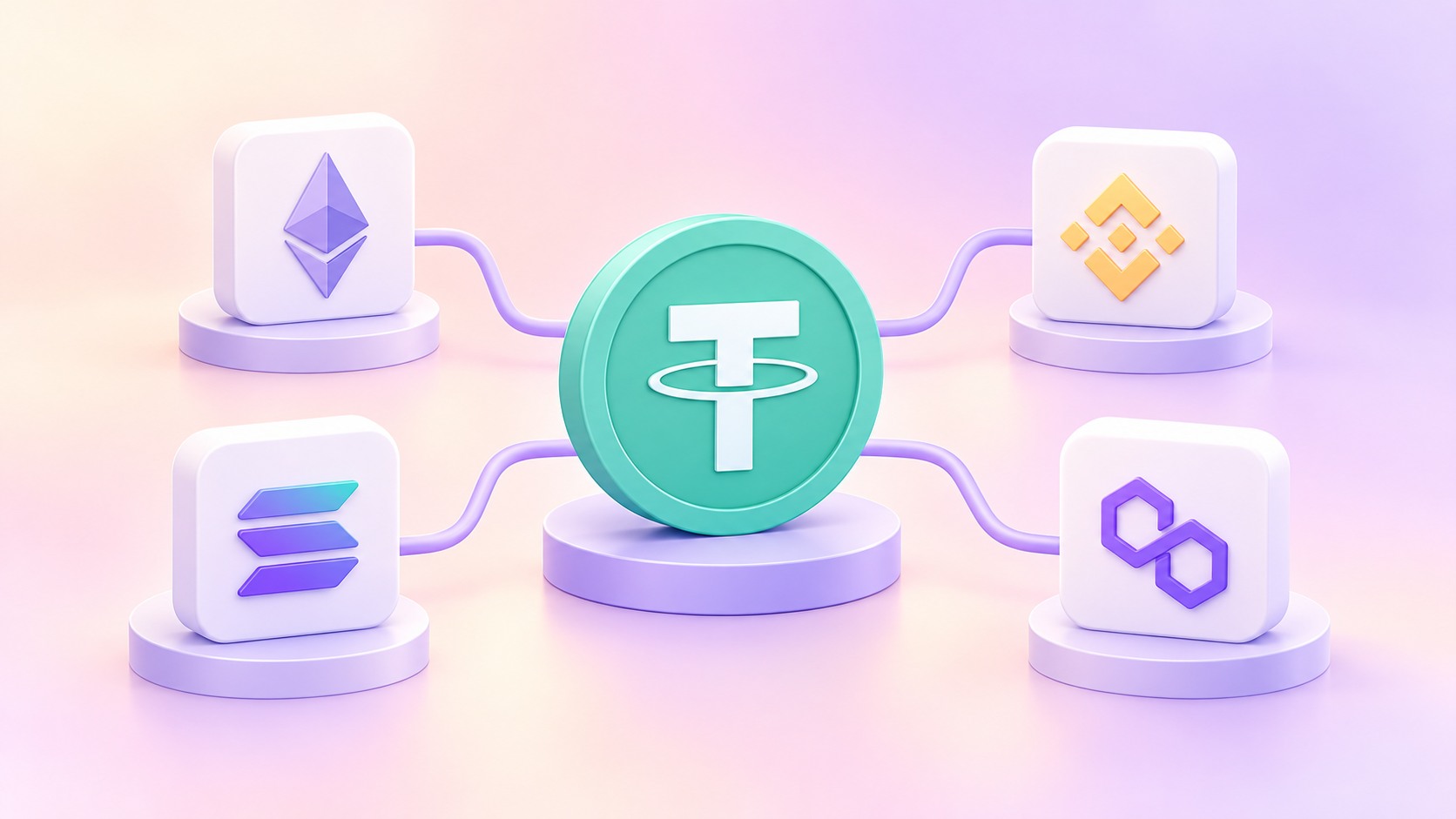
An exchange account shows a USDT deposit address that starts with T. On Coindisco, USDT is available on 14 networks; another choice may start with 0x or use a long string of letters and numbers.
Every version uses the USDT ticker. The address format, transfer fee and wallets that accept the coins follow the network.
One ticker, fourteen networks
Tether first issued USDT on Omni, a layer on top of Bitcoin. As Bitcoin fees made transfers slower and more expensive, USDT expanded to Ethereum as an ERC-20 token.
Tron followed with TRC-20, and TON later brought USDT into the wallet built into Telegram.
Each network has its own version of the token. USDT on Tron and USDT on Ethereum share a name and a dollar peg, while transfers remain on the network where they begin.
Networks also leave. Omni, the first home of USDT, is one of five networks where Tether has stopped issuing it.
Tron and Ethereum account for most USDT in circulation, according to Messari.
In Coindisco, the network is chosen before the amount. Each network in the list carries its token standard: ERC-20 for Ethereum, TRC-20 for Tron and BEP-20 for BNB Chain.
USDT TRC20 vs ERC20 addresses
An Ethereum address starts with 0x and runs to 42 characters. A Tron address starts with T and has 34. A Solana address has neither prefix.
Coindisco checks the address format against the network on the order. A T address on an Ethereum order does not pass, and the purchase stops before payment.
The harder case is 0x. Ethereum, BNB Chain, Polygon, Arbitrum and several other networks share that format, so an address check cannot tell them apart. The receiving wallet or exchange account must accept USDT on the network selected for the order.
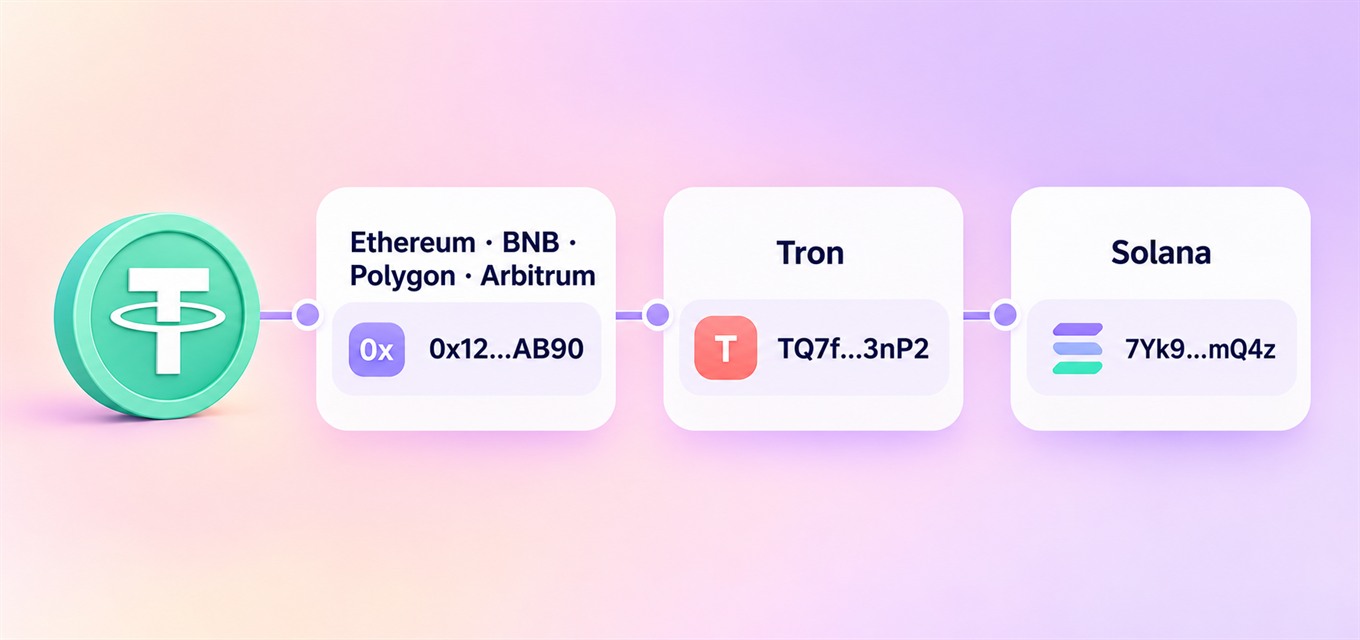
An exchange deposit page names the network next to the address. A saved wallet address in Coindisco keeps its network too.
USDT network fees after purchase
A buyer spending $100 may receive slightly different amounts of USDT across Tron, BNB Chain, Ethereum and Solana. The best crypto rate means the largest amount of USDT arriving for the same $100.
The gap between offers can be small. Sending the full amount to an address that does not support the selected network can put the transfer at risk.
The comparison ends when an offer is chosen. From there, the purchase moves to the provider with the selected network attached to the order.
The larger difference appears when the USDT moves again. Each network charges its fee in its own coin: ETH on Ethereum, TRX on Tron, SOL on Solana and TON on TON. A wallet holding USDT on Ethereum and no ETH has nothing to pay that transfer fee with.
Tron counts its fee in energy. A regular USDT transfer uses about 65,000 energy, and a wallet without staked TRX burns roughly 6.5 TRX to cover it. A transfer to an address that has never held USDT costs about twice as much.
On Ethereum, the fee follows demand across the network. The same transfer can cost different amounts on a quiet Sunday and during a market rush.
The receiving side determines the network first. The transfer fee matters after that.
Selling USDT applies the same network rule to the provider deposit, as described in how selling crypto for cash works. Coindisco opens in the web app, in Telegram and in the apps for iOS and Android.
Not investment advice. This article explains how networks work for USDT and does not recommend buying, selling or holding any cryptocurrency.
Share this article
Start trading on Coindisco
Find the best available rate for your purchase.